
Valuable Golf Clubs: Sorting the Pro Sets from the Yard Sale Clutter.
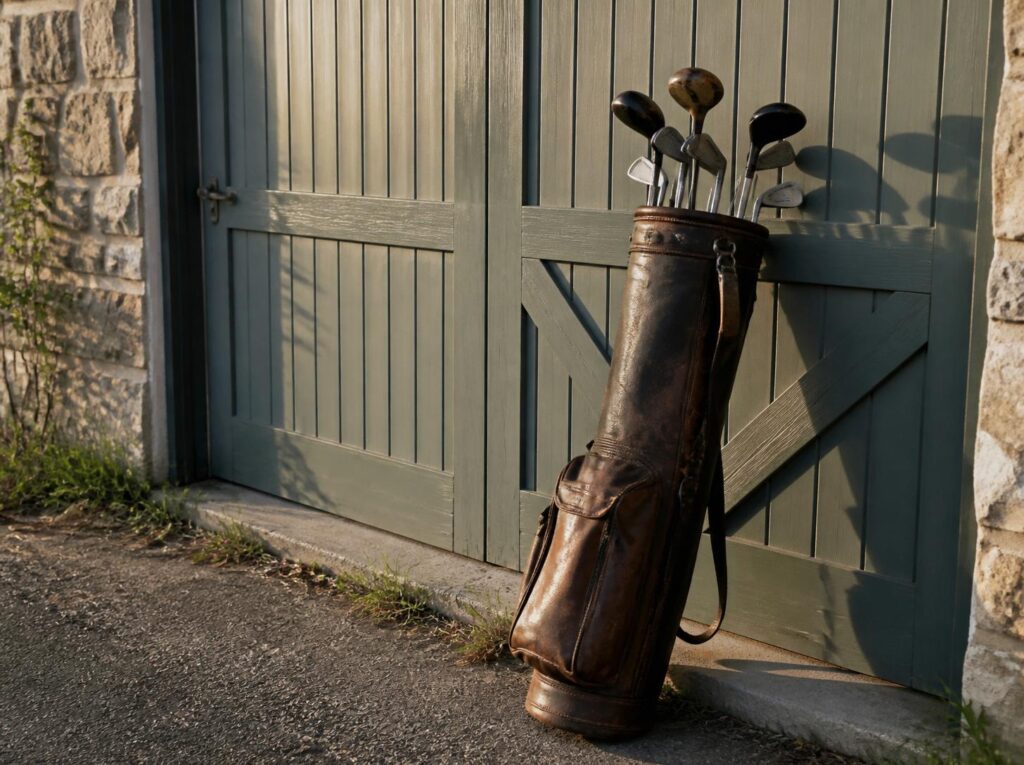
While rummaging through things at a local garage sale you see a dusty, blue nylon bag filled with mismatched golf clubs. You weren’t looking for any valuable golf clubs to collect and sell like most of the people there that kept walking by them. Most people pay them no mind because they think they’re just “old man junk” or a heavy mess that is too much work to sort. They assume that if a club isn’t shiny and brand new, it has no value.
In the trade, when hunting for valuable golf clubs to collect and sell, we know that a single club tucked in that bag could be a payday ranging from $50 to $200, and a full pro set can bring in $150 to $400 or more. Valuable golf clubs are hiding in plain sight at almost every weekend sale, provided you know how to sort the high-density performance metal from the department store clutter. To get paid in this business, you need to stop seeing “sticks” and start seeing precision-engineered assets.
The Myth of the “Too Much Clutter” Excuse
The biggest excuse I hear about golf clubs is that there are too many brands, models, and technical specs to keep track of. People get overwhelmed by the sheer volume of “sticks” in a bag and decide it isn’t worth their time to investigate. They think they need to be a scratch golfer to know what a club is worth. While you are worrying about the “work” of looking at twenty different club heads, a savvy scrapper or a collector is paying top dollar for a specific putter or a set of forged irons that you just walked past. That is a paycheck being left on the sidewalk because you allowed the “clutter” to cloud your judgment.
The solution is to stop looking at the bag as a whole and start looking for specific “tells” of quality. You do not need to be a pro golfer to spot a pro set. You just need to understand how the metal behaves and which brand names represent industrial-grade performance. Once you have a system for scanning a bag in sixty seconds, you will realize that golf clubs are high-margin inventory that is easy to move in the secondary market. People will always pay for an advantage on the course, and you are the one who finds it for them at a fraction of the retail price.
The “Iron” Scan: Forged vs. Cast
When you pull an iron out of a bag, the first thing you should look at is the back of the club head. This tells you immediately if the club was mass-produced for a beginner or engineered for a professional. The manufacturing process determines the density of the metal and the resale value.
1. Cavity Back (Cast) Irons
These clubs have a “hollowed out” back or a plastic insert. They are designed to be “forgiving” for people who aren’t very good at the game. They are made by pouring molten metal into a mold (casting). While common brands like Callaway, TaylorMade, or PING cavity backs still have a value range of $80 to $150 for a full set, they are the “standard” of the trade. They are reliable, but they aren’t the “big game” we are hunting for.
2. Muscle Back or “Blades” (Forged) Irons
These clubs are solid metal all the way through and look like a smooth, thin “blade.” If the club has the word “Forged” stamped into the metal, grab it immediately. Forged irons are made by hammering hot, solid blocks of steel into shape. This creates a much higher density and a better “feel” for the player. A set of forged irons from a brand like Mizuno, Titleist, or Srixon has a value range of $150 to $350 even if they have some “chatter” – which is just small nicks from the clubs hitting each other in the bag. Collectors and high-end players hunt for these specific forged models.
3. The Face Condition
Look at the “grooves” – the horizontal lines on the face of the club. If the grooves are sharp, clean, and deep, the club has plenty of life left. If the middle of the face is worn down to a brown, smooth circle, the club has been hit thousands of times. It still has value as a practice club, but it won’t bring the top end of your price range in the secondary market.
The Putter Goldmine: Small Items, Big Paydays
If you only have room for one thing in your truck, make it the putter. Putters are the most “personal” club in the bag and they hold their value better than almost anything else in the business. They don’t wear out like irons or drivers do.
- Scotty Cameron: This is the “Griswold” of golf clubs. Scotty Cameron putters are precision-milled from solid blocks of stainless steel. If you see this name on a putter, you have found a major asset. Even a beat-up Scotty Cameron has a value range of $100 to $250. Some rare limited editions or “Studio Select” models can go much higher.
- PING: These are the industrial classics. Look for the “Anser” model. If the putter is made of a dull, orange-ish metal, it is likely “Manganese Bronze.” These have a great “ring” when you tap them and are highly collectible. A vintage PING putter has a value range of $30 to $85 depending on the rarity of the casting.
- Odyssey: Look for the “Two-Ball” model or the ones with a white “insert” on the face. These are the workhorses of the secondary market and sell very quickly in the $40 to $70 range because they are so easy for beginners to use.
How the Material Behaves: Graphite vs. Steel Shafts
You need to check what is connecting the head to the grip. This is where the structural integrity of the club is tested. In the business, a broken shaft means a broken profit.
Steel Shafts: These are durable and rarely break, but they can rust. Check for rust spots or “pitting” on the chrome. If the shaft is bent even a tiny bit, the club is scrap metal. We want shafts from brands like “True Temper” or “KBS,” as these are the industry standards for quality.
Graphite Shafts: These are made of a carbon fiber composite. They are lighter and more expensive to manufacture. Rub your fingers along the shaft. If you feel any “splinters” or see long cracks in the paint, the shaft is “compromised” and could snap during a swing. A club with a high-quality, intact graphite shaft from a brand like “Fujikura,” “Mitsubishi,” or “Graphite Design” can add $20 to $50 to the value of the club itself.
The “Wood” That Isn’t Wood
Since the late 1980s, “woods” have been made of metal – usually titanium or steel. If you find actual wooden clubs made of persimmon, they are mostly decorative now, unless they are in mint condition from a brand like MacGregor. For the modern trade, we want the “Big Dogs.” Look for oversized drivers with “Titanium” or “Carbon” stamped on the bottom. Brands like TaylorMade (especially the “M” series or “Sim”), Ping (the “G” series), and Titleist are the ones that pay the bills. A modern titanium driver has a value range of $50 to $150.
Did You Know?
The most valuable part of a golf find might be the “headcover” or a single accessory you might normally overlook. Many people throw a rare putter headcover into a “free” box because they think it is just a head warmer. But here is the real pro tip: check the “grips” and the logos. If the clubs have fresh, tacky grips from a brand like “Golf Pride” or “Winn,” it is a sign that the owner cared for their equipment. But more importantly, look for a “circle T” logo on Scotty Cameron items. That “T” stands for “Tour Use Only.” Finding a “Tour” version of a club can turn a $200 putter into a $1,000 industrial asset. Always check the small, stamped logos on the heel of the club before you walk away.
No More Excuses: Heavy Bags are Just Organized Cash
I hear people say they don’t have the space for a golf bag or that they don’t want to haul the weight. You don’t have to keep the bag. In this trade, the bag is often just the shipping container. If the bag is moldy, broken, or smells like a basement, take the clubs out and leave the bag for the landfill. You can fit twenty sets of clubs in the same space as one dresser if you stack them correctly in a corner of your garage. You are looking for high-density titanium, forged steel, and high-quality composites.
You do not need to be a country club member to make money in this business. You are an industrial scout. When you find these items, you are saving precision-engineered tools from being wasted and putting them back into the hands of someone who will appreciate the quality. You are a part of the secondary market ecosystem.
Always check your local laws about picking and be respectful of the properties on your route. If you find a bag at the curb, make sure it is actually meant for the trash. If it is sitting by a garage door with a “Free” sign, get it in the truck before the next person rounds the corner. Play it straight, be honest with your buyers about the condition of the grooves, and your reputation will grow.
I wish you well on your next route. Keep your eyes on the brands and stay safe.
A Collector’s Resource Hub





Note: Some links may be affiliate resources that support our research.