
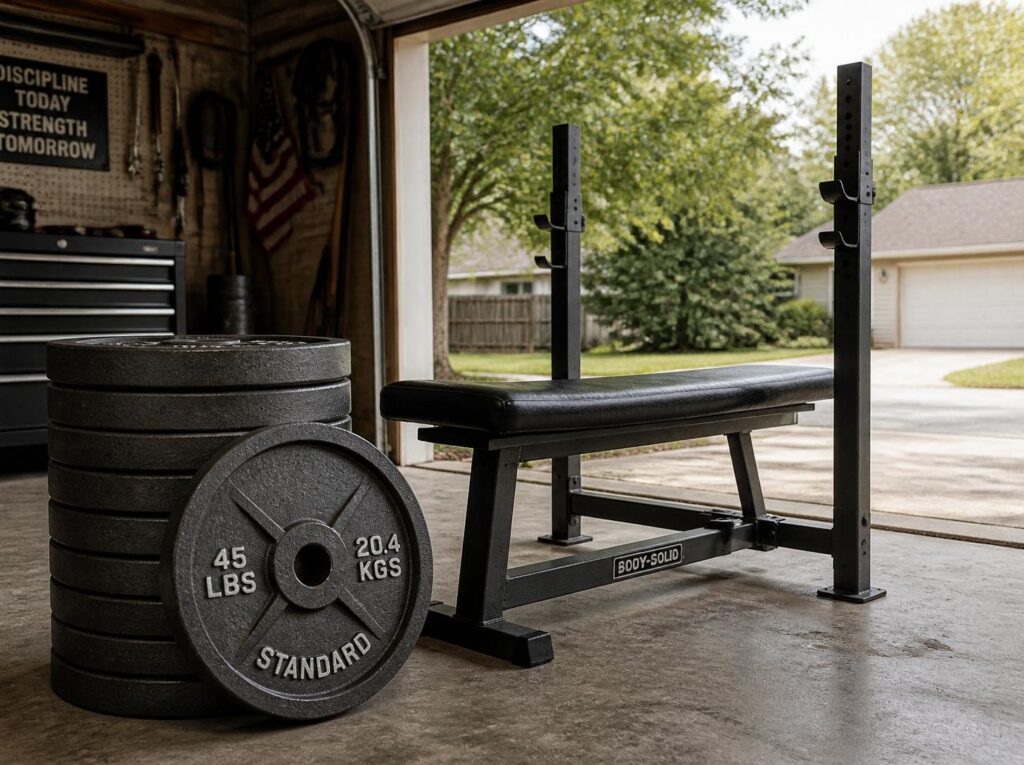
Reselling Used Gym Equipment: The Weight Bench and Iron Payday.
While it may common to see an old weight bench while out cruising neighborhoods the real prize is the pile of rusted iron plates sitting on the curb. Most people drive right past them because they think they’re too heavy to move or too rusty to be useful. They see “trash.” In the trade, we see “inventory.” Reselling used gym equipment is one of the most straightforward ways to get paid because iron does not expire. Whether it is a set of dumbbells or a full weight bench, you are looking at a commodity that has a value range of $0.50 to $2.00 per pound on the secondary market. Every pound of iron you pull from the curb is a pound of profit in your pocket.
The Myth of the “Too Heavy” Excuse
The biggest excuse I hear about gym equipment is that it is too much work to haul. People think they need a specialized team or a heavy-duty flatbed to move a few hundred pounds of iron. While you are worrying about the weight or the space in your truck, a collector or a home-gym enthusiast is looking at a retail price of $300 for a new set of weights and wishing they could find a used one for half that. That is a missed paycheck sitting on the sidewalk because of a lack of a system.
The solution is to stop looking at the total weight and start looking at the price per pound. You do not have to lift it all at once. You take the plates off the bar, you fold the bench, and you move the material piece by piece. Once you realize that a rusty 45-pound plate is exactly the same weight as a brand-new one from a big-box store, the “work” of moving it becomes a simple matter of logistics. You are an industrial scout; moving weight is just part of the day’s route.
Cast Iron vs. Concrete: How the Material Behaves
When you find weights at the curb or a garage sale, you need to know exactly what is inside them. Not all weights are created equal, and the secondary market knows the difference. You and me, we want the high-density materials that take up the least amount of space.
- Cast Iron Plates: These are the gold standard of the business. They are solid metal, usually painted black or gray. They are thin, durable, and they make a distinct “clink” when they hit each other. Even if they are covered in surface rust, they are highly valuable. A set of cast iron plates has a value range of $0.80 to $1.50 per pound.
- Plastic-Coated (Concrete) Weights: You will often see these at garage sales – large, bulky weights covered in black plastic. These are not metal; they are filled with sand or concrete. They are much larger than iron weights of the same poundage and can crack over time. While they still sell, they have a lower value range of $0.20 to $0.50 per pound.
- Dumbbells and Kettlebells: These move faster than almost anything else. If you find a pair of 25-pound dumbbells, you have a guaranteed sale. Fixed-weight dumbbells have a value range of $1.00 to $2.00 per pound because buyers prefer the convenience over adjustable plates.
Identifying Quality in Weight Benches
A weight bench is more than just a place to sit. It is a structural piece of equipment that has to hold hundreds of pounds safely. When you scan a bench at the curb, look at these three things to determine the grade of the steel and the value of the build:
1. The Welds
Look closely at where the metal tubes meet. We want to see thick, clean welds that look like a “stack of dimes” laid over the seam. This indicates a high-quality manufacturing process. If the metal is just bolted together with thin, flimsy brackets and no welding, it is a budget bench meant for light use. A heavy-duty, welded bench has a value range of $50 to $150.
2. The Upholstery
If the vinyl is ripped or cracked, do not let that stop you. As long as the wood and foam underneath are solid and haven’t been soaked in rain, the bench still has significant value. However, a clean, un-ripped bench will always sell twice as fast. If the foam is rotted or crumbling, the value drops to the price of the steel frame alone.
3. Adjustability
A bench that can transition from “flat” to “incline” or “decline” is worth much more than a simple fixed flat bench. Look for a “pop-pin” adjustment or a ladder-style notched adjustment on the back of the frame. The more positions the bench can hold, the more useful it is to a home-gym buyer.
The “Big Three” Brands to Watch For
In the secondary market, a name brand can double your profit. If you see these logos, do not leave the equipment behind, no matter how much it weighs.
- York Barbell: These are the “vintage” favorites. York has been around for nearly a century. Their old “deep dish” plates are highly collectible for their classic look. A set of vintage York plates can have a value range of $2.00 to $4.00 per pound to the right collector.
- Ivanko: This is the precision brand. If you see the Ivanko name, you are looking at top-tier material. Their plates are calibrated for extreme accuracy and are often used in professional competitions.
- Rogue Fitness: This is the modern king of the trade. Rogue equipment is overbuilt with heavy-gauge American steel and holds its value incredibly well. A used Rogue bench or bar will often sell for 80% of its original retail price because the brand is so well-respected.
The Refurbishing Process: Turning Rust into Cash
Many folks are worried about the rust on curbside iron. Rust is just a surface condition; it doesn’t change how the metal behaves or its structural integrity. You can take a set of plates that look like they’ve been at the bottom of the ocean and make them look brand new with about twenty minutes of work. Use a wire brush or a wire wheel attachment on a drill to knock off the loose flakes. Wipe the metal down with a bit of mineral spirits, and then apply a light coat of black satin spray paint. You are turning a “curbside” eyesore into a professional-grade product that commands a higher price.
Did You Know?
The most valuable part of a weight set might be the “barbell” itself, but only if it is an “Olympic” bar. You can tell the difference in a heartbeat. A standard bar is one inch thick all the way across. An Olympic bar has two-inch thick “sleeves” at the ends that rotate. But here is the pro tip: look at the ends of the bar for a “snap ring” or a brass bushing. If the ends spin smoothly and have a brass ring inside, you have found a high-end bearing bar designed for heavy lifting. A quality Olympic bar can have a value range of $100 to $300 on its own, even if the plates are missing. Always check the spin of the sleeves before you load the bar.
No More Excuses: Iron is Cash
I hear folks say they are worried about the rust. As we discussed, that is an easy fix. You do not need a fancy showroom or an expensive website to sell gym equipment. People will drive to your garage or your driveway to pick up weights because they are tired of paying monthly gym memberships. You are providing the heavy lifting so they can do theirs. You are the middleman between a discarded asset and a person trying to better themselves.
Always check your local laws about picking from the curb. When you are loading heavy iron, use your legs and not your back. If you have to make two trips to get all the plates, make two trips. The iron isn’t going anywhere. Play it straight, be honest about the weight totals, and keep your scale accurate. Integrity is how you turn a one-time pick into a long-term business.
I wish you well on your next route. Watch your toes around those plates and stay safe.
A Collector’s Resource Hub




Note: Some links may be affiliate resources that support our research.